Musings about life on the Palouse
Saturday, January 24, 2015
A Comedy of Errors
This is my stove. I love this stove. I bought it when I first moved here. Paul had a lovely old antique gas range that was cool to look at but hell to cook on...and it had a gas leak...and an oven the size of a breadbox with no thermostat, only a thermometer on the front to tell you what the temperature was inside. It was a nice period piece but just not going to cut it for someone like me who loves to bake.
This is a dual-fuel range, meaning the cook top is gas and the oven is electric. This is a great combo if you're a cook; the best of both worlds. In my previous home, I also had one except it was a Viking. When I got ready to purchase this one, we did the research and found that, at the time, the Kitchenaid was getting better reviews than the Viking. So that's what we bought.
In the 9+ years that I've used this stove, I've only had a couple of problems. The oven lights quit working some time ago. After replacing several bulbs, only to have them immediately go out, I gave up on having a light in the oven. I get along fine.
About 5 years ago, the whole oven stopped working, no display, no nothing. Turned out it was the "mother board." Isn't amazing that our appliances have such things? It was not a cheap fix but it could be fixed and on we went.
About 6 weeks ago, after making biscuits one morning, we heard an odd noise. It turned out that the interior glass on the oven door cracked and split. Yikes! I had never heard of such a thing happening but the appliance repair guys said it wasn't unusual and that we could actually replace it ourselves. So we ordered the glass and waited. When the glass arrived, we took the oven door off and started in on dismantling it. It was a little trying but do-able. It turns out that there are four pieces of glass in my oven door. The interior one that broke, the exterior one, and two pieces of tempered glass sandwiched together in the middle. The two tempered pieces were filthy from air circulation in the oven so I set them on the counter and proceeded to clean them. I gave them a wipe with a sponge and got out the glass cleaner and some paper towels. As soon as I touched the paper towel to the first piece, it shattered into a zillion pieces and glass flew everywhere. It sounded like a rain stick. According to the appliance repair guys, tempered glass can be well...temperamental. So they ordered me another piece of glass.
This one took longer to arrive than the previous one and Paul and I started feeling a bit unsure of how to put the whole thing back together now that it had been some time. So, we loaded all the pieces into the car and I took it in to the shop for them to take care of. I figured we'd have it back in the next day or so. At the end of the second day, I called to check on the progress. The appliance repair guy said, "Well, I've got a story for you." It's never good when they say that. Turns out when they got it back together, the handle was crooked. They loosened it, straightened it out and started to screw it back down when...crack...the exterior piece of glass broke. Another piece of glass is ordered (at least I didn't have to pay for this one) and I still don't have an oven door. At this point it's been two weeks and I'm leaving for the holidays. So I told them they have a week until I get home and I'll be coming in to pick it up. When I got there to pick it up, the guy carrying it out to my car suddenly stops in the parking lot, holds up the door, and says, "Hey, come here and look at this." There, wedged between the glass, was a screw. Apparently it had come loose and was now hanging out in the oven door. I had to come back the next day and pick it up. But, there it was with no broken glass and no runaway screws. We put it back on the stove and baked away...for 5 whole days.
One the morning of the sixth day, I went downstairs to find that the display was completely black. No amount of turning on or off made a difference. Sigh....it took two weeks for the parts to come in that the appliance repair guys thought it needed, a new display assembly. Yesterday one of them came to install it only to decide that it wasn't likely the display but was probably the mother board again, which would have to be ordered.
I have had use of my oven for 5 of the last 48 days (and counting). We're keeping our fingers crossed that all will be fixed sometime this coming week and that biscuits will once again be part of our breakfast routine (or scones, or muffins, or puffy pancakes) to say nothing about roasted anything for dinner. Did I say I love my stove? I really do, which is why I miss it so much. At least the cook top is still working (as long as I didn't just jinx it).
Saturday, January 10, 2015
Lady Marmalade
It's winter. Not exactly the time of year one thinks about canning and preserving. Those busy days are tucked in earlier in the fall when all the garden seems to ripen at once. I don't do a lot of food preservation anyway...tomato sauce, all sorts of berries, jars of pesto frozen for winter meals that remind of us summer...that sort of thing.
However, there is one tasty treat that beckons to be made at this time of year, when the citrus from far off places shows up at the store, orange marmalade. I love the flavor of a good orange marmalade, one without the bitter taste that shows up in some types. I discovered many years ago that I could make it myself rather easily. Leave it to the good old Joy of Cooking to come through with a great and easy recipe. (However I have found that some editions do not have the same recipe. Mine is from the 1964 edition.) All it takes is a couple of Valencia oranges, a couple of lemons, water, sugar, and lots of time. The results are so worth the investment, though. It's like a bit of sunshine on a winter day.
By the way, apologies for the long gap in posting. I felt like I had gone through the seasons of my life and talked about everything that could be said. Maybe not...
Saturday, October 12, 2013
Something New
We cook a lot of good food around here. Both Paul and I love to cook and have our own specialties. His is usually more ethnic...Indian, Mexican, etc. Mine tends toward pastas and soups and breakfast foods. Between the two of us, there isn't much we haven't tried. However, tonight I made something entirely new, something neither one of us had ever eaten before...gnudi.
Gnudi is a made-up name trying to sound Italian like gnocchi. Gnocchi is classified as a pasta often made with a potato base. It looks like little balls of dough and is quite good. I've made it before using sweet potatoes and it was delicious.
Gnudi was apparently created by the Spotted Pig restaurant in New York City. It has a base of ricotta cheese, eggs, and flour. There is also lots of fresh ground nutmeg and some chives involved. It sounded intriguing so I decided to go for it.
I made fresh ricotta cheese, which is really easy by the way, and let it drain overnight. Then I added the rest of the ingredients and formed the "dough" into 1" balls. They were then buried in cups of semolina flour and left overnight in the fridge. After bringing them back to room temperature, they are dropped in boiling water and cooked until they pop back to the top of the water, just a couple of minutes. Really pretty easy.
I served them with chanterelle mushrooms (my favorites!) sauteéd in butter with garlic and thyme. Oh, my! They were like little pillows of deliciousness, slightly chewy on the outside and soft and gooey on the inside. They have definitely been added to our list of good things to make again. How fun to discover a new taste treat!
Gnudi is a made-up name trying to sound Italian like gnocchi. Gnocchi is classified as a pasta often made with a potato base. It looks like little balls of dough and is quite good. I've made it before using sweet potatoes and it was delicious.
Gnudi was apparently created by the Spotted Pig restaurant in New York City. It has a base of ricotta cheese, eggs, and flour. There is also lots of fresh ground nutmeg and some chives involved. It sounded intriguing so I decided to go for it.
I made fresh ricotta cheese, which is really easy by the way, and let it drain overnight. Then I added the rest of the ingredients and formed the "dough" into 1" balls. They were then buried in cups of semolina flour and left overnight in the fridge. After bringing them back to room temperature, they are dropped in boiling water and cooked until they pop back to the top of the water, just a couple of minutes. Really pretty easy.
I served them with chanterelle mushrooms (my favorites!) sauteéd in butter with garlic and thyme. Oh, my! They were like little pillows of deliciousness, slightly chewy on the outside and soft and gooey on the inside. They have definitely been added to our list of good things to make again. How fun to discover a new taste treat!
Saturday, August 24, 2013
Saucy Tomatoes
I know, I know I've posted about tomatoes twice before (!) but I just can't help myself. It's tomato season again (hallelujah) and that means time to make tomato sauce for the freezer. Every year we plant at least a dozen sauce tomato plants, usually either Roma or San Marzano tomatoes. And every year Paul would talk dreamily about the Milano Bush tomatoes he used to grow. Somewhere along the way, he quit starting his own plants and couldn't find the seed for Milanos anymore. Then, lo and behold, there it was, Milano Bush tomato seed in one of the seed catalogs this year. Of course, one thing led to another and before you know it we're buying a whole indoor seed growing set-up so we can start our own tomato plants in March!
I'm happy to say we were successful and planted 10 Milano tomato plants in the garden. They are just starting to come on. If all the tomatoes on the plants ripen, we'll have plenty of sauce this year.
Today I made the first batch of sauce from the first real picking of the Milanos. It really is easy with our tomato saucing contraption.
I got two pints of sauce from this bunch. They are in the freezer as I type. Fresh frozen tomato sauce tastes like it just came from the garden when you use it. It's definitely a staple around here. So we get that tomato taste all year round!
I'm happy to say we were successful and planted 10 Milano tomato plants in the garden. They are just starting to come on. If all the tomatoes on the plants ripen, we'll have plenty of sauce this year.
Today I made the first batch of sauce from the first real picking of the Milanos. It really is easy with our tomato saucing contraption.
I got two pints of sauce from this bunch. They are in the freezer as I type. Fresh frozen tomato sauce tastes like it just came from the garden when you use it. It's definitely a staple around here. So we get that tomato taste all year round!
Sunday, June 9, 2013
The Old Yellow Rose
There is a beautiful bushy yellow rose that grows here on the Palouse. I'd noticed it around the area the first few years I was here. One of my neighbors has one growing along his fence. It gets 5-6 feet tall and just as wide. There is another one growing across the river from us on an old home site. The house long ago burned down but some of the flowers are still there.
My neighbor told me he thought it was called a Harison's rose. I did a little research and found that it is indeed that rose and that it's origin is quite old. "The original plant was discovered in the garden of amateur hybridist George F. Harison in Manhattan in 1830. Suckers of it traveled west with the pioneers. 'Harison's Yellow' rose runs under a few different names including: ' Hogg's Yellow', 'Yellow Rose of Texas', 'Harisonii', the 'Oregon Trail Rose' and 'Pioneer rose'."
About three years ago I decided I wanted to try to start one of these roses. I drove over to the old home site and dug up a couple of suckers and transplanted them along our fence by the road. Unfortunately, this was the same year of the Vole Wars and those little buggers tunneled right under those starts and they died. Sigh...
So last spring I headed back to the home site and dug up a few more suckers. Luckily no one lives around there who cares. These starts went into the same spot along our old fence and have done quite well. I was quite excited a few weeks ago when I discovered buds on the bush. And now it is blooming! The blossoms aren't large but they smell really sweet. There is something lovely about continuing the spread of this old rose around the countryside.
My neighbor told me he thought it was called a Harison's rose. I did a little research and found that it is indeed that rose and that it's origin is quite old. "The original plant was discovered in the garden of amateur hybridist George F. Harison in Manhattan in 1830. Suckers of it traveled west with the pioneers. 'Harison's Yellow' rose runs under a few different names including: ' Hogg's Yellow', 'Yellow Rose of Texas', 'Harisonii', the 'Oregon Trail Rose' and 'Pioneer rose'."
About three years ago I decided I wanted to try to start one of these roses. I drove over to the old home site and dug up a couple of suckers and transplanted them along our fence by the road. Unfortunately, this was the same year of the Vole Wars and those little buggers tunneled right under those starts and they died. Sigh...
So last spring I headed back to the home site and dug up a few more suckers. Luckily no one lives around there who cares. These starts went into the same spot along our old fence and have done quite well. I was quite excited a few weeks ago when I discovered buds on the bush. And now it is blooming! The blossoms aren't large but they smell really sweet. There is something lovely about continuing the spread of this old rose around the countryside.
Wednesday, June 5, 2013
Sew Much Love
Paul, my husband, practices a martial art called aikido. He's been doing it for 20 years and has a black belt in the art. As you can guess, it is a big part of his life and very important to him. Practitioners of aikido wear special clothing on the mat. One piece of this clothing is called a hakama. It looks like a pair of very pleated culottes.
So, imagine his chagrin when he needed a new hakama and found that the company he had previously purchased them from had gone out of business.
Now in my life I have done quite a bit of seamstress work. I used to make many of my clothes and have done sewing for other folks, too. I've made everything from tea towels to wedding dresses. It seemed like making a hakama should be within my realm of skills so I went hunting for a pattern and the proper fabric.
A hakama turns out to be a very complicated garment.
It has a number of pleats both in the back and the front. Here is a picture of one so you can get the idea...and that's just the front.
Once we found the pattern and the right fabric, I set to work.
Oh, my! I had no idea how difficult this was going to be. It got to the point where I would work on it for a while and then have to give my brain a break before I could go back to it.
But I persevered and finally finished it. Paul is very pleased and a little bit proud, I think, that I made it for him.
Here he is in his new hakama...
and breaking it in getting thrown
by his sensei.
Thankfully, a hakama will last for a long time.
The things we do for the ones we love! And it's totally worth it.
So, imagine his chagrin when he needed a new hakama and found that the company he had previously purchased them from had gone out of business.
Now in my life I have done quite a bit of seamstress work. I used to make many of my clothes and have done sewing for other folks, too. I've made everything from tea towels to wedding dresses. It seemed like making a hakama should be within my realm of skills so I went hunting for a pattern and the proper fabric.
A hakama turns out to be a very complicated garment.
It has a number of pleats both in the back and the front. Here is a picture of one so you can get the idea...and that's just the front.
Once we found the pattern and the right fabric, I set to work.
Oh, my! I had no idea how difficult this was going to be. It got to the point where I would work on it for a while and then have to give my brain a break before I could go back to it.
But I persevered and finally finished it. Paul is very pleased and a little bit proud, I think, that I made it for him.
Here he is in his new hakama...
and breaking it in getting thrown
by his sensei.
Thankfully, a hakama will last for a long time.
The things we do for the ones we love! And it's totally worth it.
Sunday, May 12, 2013
Wildflower Walk
Living out in the country gives us a wonderful place to walk. We just head out down our gravel road for what we call a "three mile Idaho." By the time we get about a mile and a half down the road, we're in Idaho. By the time we get home, we've gone three miles.
This time of year the walk down the road is awe-inspiring. The countryside is abloom with wildflowers...lots and lots of wildflowers. These pictures are ones we took just today on our walk. If you click on any of them, they will get bigger and show more detail.

The blue one on the left is Brodiaea.
The yellow one on the right is Arrowleaf Balsamroot with some purple Delphinium.
This shows a drift of purple Delphinium.
This is Golden Pea close-up
...and more down by the river.
This one is Groundsel.
The white one is Prairie Star and the blue one is Blue-eyed Mary.
This shrub is called Serviceberry. It's growing up into a Ponderosa pine that is also "blooming" with red cone "flowers."
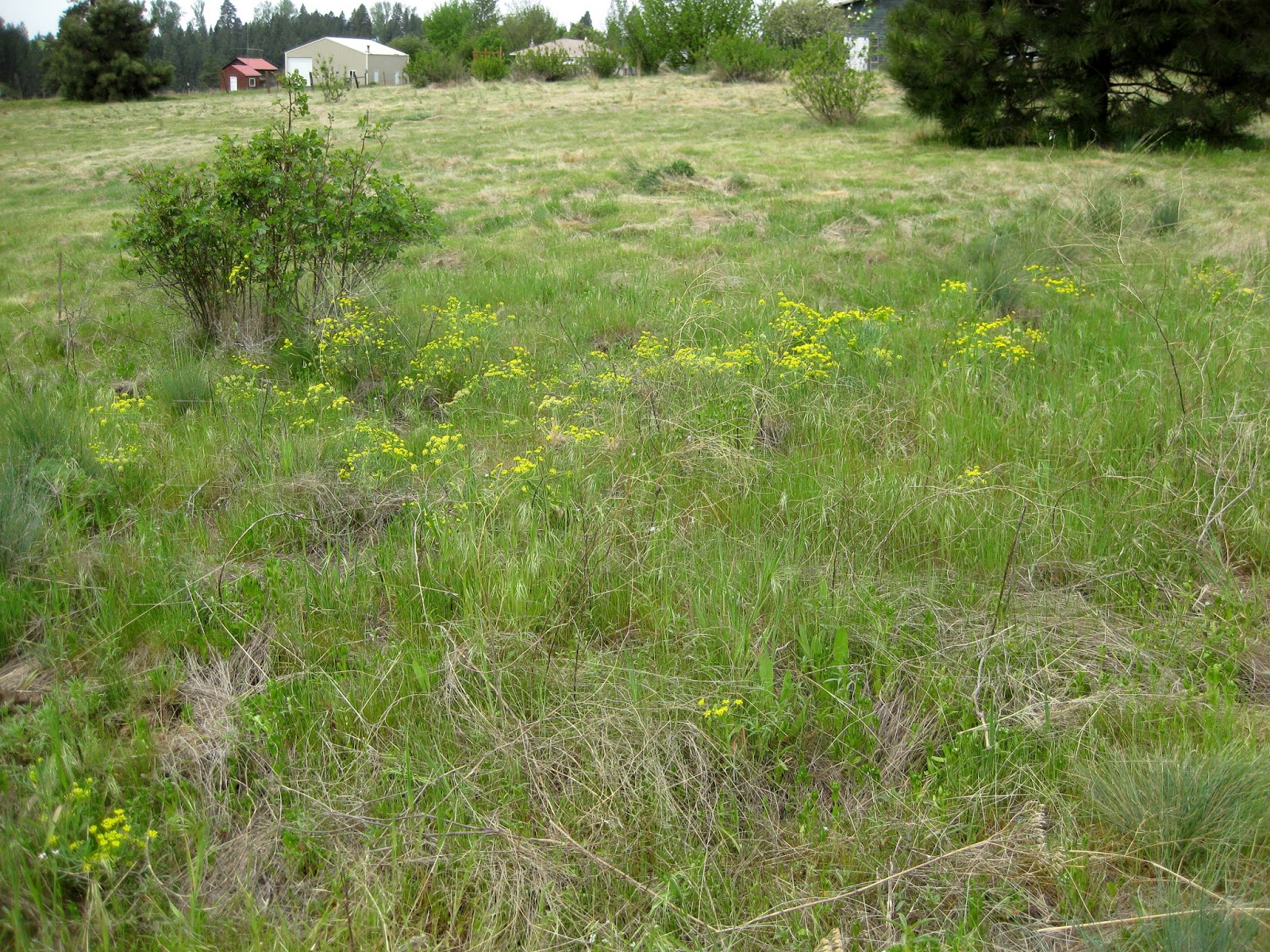
This yellow is Swale Desert Parsley (a type of lomatium).

This last one is a favorite of ours, Camas.
I have to confess that these last two photos were taken on our property in the prairie Paul has been restoring for the past twenty years. If you want to read about that project, visit his blog at palouserivermusic.blogspot.com .
We feel so lucky to live in such a beautiful place...all right down the road.
This time of year the walk down the road is awe-inspiring. The countryside is abloom with wildflowers...lots and lots of wildflowers. These pictures are ones we took just today on our walk. If you click on any of them, they will get bigger and show more detail.
The blue one on the left is Brodiaea.
The yellow one on the right is Arrowleaf Balsamroot with some purple Delphinium.
This shows a drift of purple Delphinium.
This is Golden Pea close-up
...and more down by the river.
This one is Groundsel.
This shrub is called Serviceberry. It's growing up into a Ponderosa pine that is also "blooming" with red cone "flowers."
This yellow is Swale Desert Parsley (a type of lomatium).
This last one is a favorite of ours, Camas.
I have to confess that these last two photos were taken on our property in the prairie Paul has been restoring for the past twenty years. If you want to read about that project, visit his blog at palouserivermusic.blogspot.com .
We feel so lucky to live in such a beautiful place...all right down the road.
Wednesday, May 8, 2013
Asparagus!
It's suddenly spring on the Palouse! Actually the weather the last week or so is more summer than spring but we'll take it! Life is busy, busy in the garden. Seedling are sprouting, trees are blooming, and flowers are dancing with color. I love spring the most.
Last spring I planted a small asparagus bed. I carved out a little nook of the encroaching prairie for 6 plants. One must be patient to grow asparagus. There is no harvesting until the plants have been in for an entire year and then one can harvest only for two weeks. The next year you can harvest for about 4 weeks. The following year for 6 weeks. After that you can harvest an entire 8 week season!
See what I mean about being patient?
Anyway, this is the first harvesting year for my tiny patch and look what I picked today! I'm so excited. It's not going to be much of a meal but I bet they are going to taste wonderful.
I recently read that 24 mature asparagus plants will yield about 10 pounds of asparagus in a season. Obviously, at 6 plants, I have under-planted! I am already making plans to expand the asparagus bed and put in more plants next spring. We love asparagus around here!
Last spring I planted a small asparagus bed. I carved out a little nook of the encroaching prairie for 6 plants. One must be patient to grow asparagus. There is no harvesting until the plants have been in for an entire year and then one can harvest only for two weeks. The next year you can harvest for about 4 weeks. The following year for 6 weeks. After that you can harvest an entire 8 week season!
See what I mean about being patient?
Anyway, this is the first harvesting year for my tiny patch and look what I picked today! I'm so excited. It's not going to be much of a meal but I bet they are going to taste wonderful.
I recently read that 24 mature asparagus plants will yield about 10 pounds of asparagus in a season. Obviously, at 6 plants, I have under-planted! I am already making plans to expand the asparagus bed and put in more plants next spring. We love asparagus around here!
Wednesday, April 3, 2013
Starting Over
Life is full of do-overs, or times when you wish you could do-over, and gardening is no exception. There is the occasional plant that turns out to be disappointing or dead once the winter has gotten to it. There are plants that just show up in my garden that I didn't put there, remnants of a former life...for instance the Shasta daisies. Around here, Shasta daisies are an invasive species, no kidding. I thought I could control them but, they were voracious and I had to pull them all out before they took over the entire flower garden.
And then there are the things that just don't turn out the way you had planned. The latest, for me, were my raspberries. They are my favorite berry and I really look forward to first ripe ones eaten right off the cane. Unfortunately, the type that I planted here turned out to be a rather late ripening variety. In my defense, I ordered a different kind but these were substituted by the nursery (it was an online order) because the ones I wanted were all sold out. I figured that would be okay and that they probably knew what they were doing. Now, I'm not so sure.
The problem with a late ripening raspberry here is that we have a rather short growing season compared to many other places and these berries often did not get ripe until late August or early September. Our first freeze is often mid to late September which means a very short raspberry season. Not good. So I made the decision to dig out the raspberry patch and start over. This was no small feat. I agonized about this decision over the winter. It's hard for a gardener to pull out a perfectly good plant but I finally decided that having a longer raspberry season was more important.
About a month ago, I dug out the old canes and cleaned up the bed. This week we added some compost to the soil and I worked it in to give the new berries a nice place to grow. Today the new raspberry canes went in. This time, instead of ordering plants from somewhere, I got starts from my friends Diane and Michael who live over in Potlatch, about 8 miles away. Diane doesn't know the name of this variety. Her starts were given to her by another local. She calls them "Prolific Potlatch" raspberries. I figure these are all good omens that my raspberry bed will produce some really yummy berries. Thank goodness for do-overs!
And then there are the things that just don't turn out the way you had planned. The latest, for me, were my raspberries. They are my favorite berry and I really look forward to first ripe ones eaten right off the cane. Unfortunately, the type that I planted here turned out to be a rather late ripening variety. In my defense, I ordered a different kind but these were substituted by the nursery (it was an online order) because the ones I wanted were all sold out. I figured that would be okay and that they probably knew what they were doing. Now, I'm not so sure.
The problem with a late ripening raspberry here is that we have a rather short growing season compared to many other places and these berries often did not get ripe until late August or early September. Our first freeze is often mid to late September which means a very short raspberry season. Not good. So I made the decision to dig out the raspberry patch and start over. This was no small feat. I agonized about this decision over the winter. It's hard for a gardener to pull out a perfectly good plant but I finally decided that having a longer raspberry season was more important.
About a month ago, I dug out the old canes and cleaned up the bed. This week we added some compost to the soil and I worked it in to give the new berries a nice place to grow. Today the new raspberry canes went in. This time, instead of ordering plants from somewhere, I got starts from my friends Diane and Michael who live over in Potlatch, about 8 miles away. Diane doesn't know the name of this variety. Her starts were given to her by another local. She calls them "Prolific Potlatch" raspberries. I figure these are all good omens that my raspberry bed will produce some really yummy berries. Thank goodness for do-overs!
Thursday, February 14, 2013
Sweet Hearts
It's Valentine's Day. At our house, we don't make a big deal out of Valentine's Day. Oh, we have our traditions but they have nothing to do with store-bought cards and gifts. Our philosophy is that, honestly, every day should be like Valentine's Day. It feels like that to Paul and me. However, we do like a little celebration just as much as the next couple so we celebrate the day of love with some lovely rituals.
The first is that we always make each other a Valentine. Sometimes they are goofy, sometimes serious but, always, made by hand.
The second is that I always make shortbread hearts. Shortbread is a favorite around here. Maybe it is partially because Paul has Scottish heritage. Maybe it's just because it tastes so darned good. Either way, I make them as a Valentine's treat. This year is no different. This year's batch looks just like every other year's. Big shortbread hearts drizzled with a little pink glaze. There's no better way to say I love you than a good cookie!
The first is that we always make each other a Valentine. Sometimes they are goofy, sometimes serious but, always, made by hand.
The second is that I always make shortbread hearts. Shortbread is a favorite around here. Maybe it is partially because Paul has Scottish heritage. Maybe it's just because it tastes so darned good. Either way, I make them as a Valentine's treat. This year is no different. This year's batch looks just like every other year's. Big shortbread hearts drizzled with a little pink glaze. There's no better way to say I love you than a good cookie!
Saturday, February 2, 2013
Winter harvest
It's winter on the Palouse. This means cold temperatures, rain, snow, and wind. It means snowy, icy roads and bundling up before heading out anywhere. It's wool socks and sweaters and a fire constantly burning in the woodstove. It's certainly NOT gardening weather, that's for sure. Well, except for this. The carrots and parsnips we left in the garden bed last fall finally got dug up today. I was afraid they might be mushy by now after all the hard freezes and snowy weather but, they were beautiful! Monday, January 28, 2013
Man's Best Friend
I had never lived with a dog before I moved here to live with Paul. Oh, we always had dogs when I was growing up on the farm but those dogs lived outside and never came in the house. They were farm dogs. I was only really attached to one of them, Buddy. Unfortunately, Buddy had a roving eye and a yen for the female dog across the highway. Late one night, it became his undoing. He was hit by a car and killed. It took me days of crying to get over it. I think I was about 12 at the time.
However, part of the Paul package was Gracie, his border collie. I was a bit apprehensive about living with a dog that came indoors. Would she be in the way, leave dog hair everywhere, be a nuisance? Well, she was all those things but she was also an amazingly well-trained and intelligent dog. She grew on me.
Gracie was smart enough to know what certain words meant and so we had to either spell things or use alternative words when we didn't want her to get excited...like perambulate instead of walk, flying disc instead of frisbee, or European football instead of soccer. But she still had ways of figuring things out that we couldn't understand. She seemed to know before we did that we were planning a walk down the road. She would start to get excited if she heard my noisy sock drawer upstairs (where she wasn't allowed to go) assuming I was putting on socks and shoes for a walk. Even the times she was disappointed because I was only going out to work outside, her enthusiasm for my putting on my socks and shoes never waned. She was always hopeful.
As you may have guessed by my using the past tense, Gracie died about two months ago. She was getting to be a bit of an old dog. She had blown out her knee last year and limped a little now and then. She didn't always move as fast as she once had. However, she seemed to be doing okay for a dog of a certain age. Until one day, after one of her beloved walks down the road, she just didn't seem to have too much energy. As the day wore on, she seemed less like herself, not wanting to come inside from the rain, panting and just lying around. We knew something was really wrong when she didn't even wag her tail when Paul talked to her and petted her in her "den" behind the couch that night. We decided we would have to take her to the vet the next morning. She died in her sleep that night. Blessedly, it was fast and relatively painless. She was home with her pack and in her den. A good place to be.
That was two months ago and we all still miss her. It's often at funny times like driving in the driveway and not seeing her run down to meet us. I notice it most when I come downstairs in the morning. Gracie had decided some time ago that I was the person who would let her outside in the morning and she would greet me, excitedly, at the bottom of the stairs and do her little jumpy run ahead of me to the front door. I still expect to see her there sometimes.
Gracie is buried out in our prairie. This spring we will plant a Ponderosa pine over her. Gracie was a good dog.
However, part of the Paul package was Gracie, his border collie. I was a bit apprehensive about living with a dog that came indoors. Would she be in the way, leave dog hair everywhere, be a nuisance? Well, she was all those things but she was also an amazingly well-trained and intelligent dog. She grew on me.
Gracie was smart enough to know what certain words meant and so we had to either spell things or use alternative words when we didn't want her to get excited...like perambulate instead of walk, flying disc instead of frisbee, or European football instead of soccer. But she still had ways of figuring things out that we couldn't understand. She seemed to know before we did that we were planning a walk down the road. She would start to get excited if she heard my noisy sock drawer upstairs (where she wasn't allowed to go) assuming I was putting on socks and shoes for a walk. Even the times she was disappointed because I was only going out to work outside, her enthusiasm for my putting on my socks and shoes never waned. She was always hopeful.
As you may have guessed by my using the past tense, Gracie died about two months ago. She was getting to be a bit of an old dog. She had blown out her knee last year and limped a little now and then. She didn't always move as fast as she once had. However, she seemed to be doing okay for a dog of a certain age. Until one day, after one of her beloved walks down the road, she just didn't seem to have too much energy. As the day wore on, she seemed less like herself, not wanting to come inside from the rain, panting and just lying around. We knew something was really wrong when she didn't even wag her tail when Paul talked to her and petted her in her "den" behind the couch that night. We decided we would have to take her to the vet the next morning. She died in her sleep that night. Blessedly, it was fast and relatively painless. She was home with her pack and in her den. A good place to be.
That was two months ago and we all still miss her. It's often at funny times like driving in the driveway and not seeing her run down to meet us. I notice it most when I come downstairs in the morning. Gracie had decided some time ago that I was the person who would let her outside in the morning and she would greet me, excitedly, at the bottom of the stairs and do her little jumpy run ahead of me to the front door. I still expect to see her there sometimes.
Gracie is buried out in our prairie. This spring we will plant a Ponderosa pine over her. Gracie was a good dog.
Sunday, October 7, 2012
Turn, Turn, Turn
Time is turning into another season. This weekend has been beautiful warm Fall weather, the kind that's perfect for getting a few things done outside.
We've already had many nights of freezing weather so the garden has pretty much died as you can see from this picture of what used to be our tomatoes. Sigh.
So my job this weekend was to take out all the dead garden plants and get them into the compost bins. It's not a difficult job but it takes a little time. It always makes me a little sad, though. It's the end of our fresh garden food. Oh, there are still carrots, beets, and parsnips for Fall food but it's time to move on.
Of course, like every other task around here, it became complicated. Paul has been talking for a couple of years about making new boards for the compost bins. The old ones are breaking and have gaps that are too big and stuff falls out of. He decided that this weekend would be the time to take them on.
Now we have lovely new boards that resemble Lincoln logs. They are made out of old cedar siding that Paul had stored in the barn. They really do look much better and are sturdier.
The other offshoot of redoing the compost boards is that we had to turn over the compost and found lots of lovely soil to spread on the newly bared garden beds. It never ceases to amaze me that all those kitchen scraps and dead plant parts turn into such beautiful dirt! It's the ultimate recycling!
We've already had many nights of freezing weather so the garden has pretty much died as you can see from this picture of what used to be our tomatoes. Sigh.
So my job this weekend was to take out all the dead garden plants and get them into the compost bins. It's not a difficult job but it takes a little time. It always makes me a little sad, though. It's the end of our fresh garden food. Oh, there are still carrots, beets, and parsnips for Fall food but it's time to move on.
Of course, like every other task around here, it became complicated. Paul has been talking for a couple of years about making new boards for the compost bins. The old ones are breaking and have gaps that are too big and stuff falls out of. He decided that this weekend would be the time to take them on.
Now we have lovely new boards that resemble Lincoln logs. They are made out of old cedar siding that Paul had stored in the barn. They really do look much better and are sturdier.
The other offshoot of redoing the compost boards is that we had to turn over the compost and found lots of lovely soil to spread on the newly bared garden beds. It never ceases to amaze me that all those kitchen scraps and dead plant parts turn into such beautiful dirt! It's the ultimate recycling!
Sunday, September 9, 2012
Naan
Paul is a wonderful cook. He likes to make ethnic food...Mexican, Thai, and especially, Indian food. Some time ago, he showed me how to make naan, an Indian bread similar to pita bread. Now I make the naan and he makes the rest of the meal.
Naan is really easy to put together. The base is flour, salt, baking powder, and yogurt. This is all kneaded together and sits to rise for a couple of hours. Once the dough is ready, it is cut into pieces and rolled out into rounds. One at a time, the rounds are slapped onto a hot cast iron skillet for a few minutes until they begin to puff up.
Then the whole pan is stuck under the broiler for a few more minutes until the top starts to color. When you take it out, you have a big puffy pillow of naan.
It's the perfect foil for spicy Indian food and the leftovers make great "pita" sandwiches.
As Paul always says, "It's a naan starter."
Naan is really easy to put together. The base is flour, salt, baking powder, and yogurt. This is all kneaded together and sits to rise for a couple of hours. Once the dough is ready, it is cut into pieces and rolled out into rounds. One at a time, the rounds are slapped onto a hot cast iron skillet for a few minutes until they begin to puff up.
Then the whole pan is stuck under the broiler for a few more minutes until the top starts to color. When you take it out, you have a big puffy pillow of naan.
It's the perfect foil for spicy Indian food and the leftovers make great "pita" sandwiches.
As Paul always says, "It's a naan starter."
Sunday, September 2, 2012
Tomato Inspiration
No, I haven't fallen off the face of the Earth...but I haven't written anything in a couple of months. I have no excuses, just temporary lack of inspiration. Then the tomatoes started to ripen. Ahhh, homegrown tomatoes. I know I've sung their praises before but I just can't help doing it again.
We love just about any fresh tomato pasta sauce around here but we do have a couple of real favorites.
I made one of them just the other night. It doesn't have a fancy name, just Fresh Tomatoes with Fettuccine or something like that. It has a sort of Mediterranean feel to it. It's easy to riff on but here are the basics. Most every fresh tomato pasta sauce I know starts with 1 1/2 pounds of fresh tomatoes, diced. This one adds 1/4 cup of finely diced red onion, 1 diced clove of garlic, 1/2 cup of crumbled feta cheese, about a cup each of chopped parsley and fresh basil, and a handful of kalamata olives. Toss all these with 2 T. of balsamic vinegar, 3 T. of olive oil, and some salt and pepper. You can do this in the afternoon and let it sit. Just add one pound of cooked fettuccine when you're ready to eat. This picture is of the sauce before the pasta was added.
Our very favorite fresh sauce is called Penne all'Insalata. This is another one to put together in the afternoon and let it sit until you're ready to have dinner. I think this type of dish is great for hot summer weather. This one also starts with 1 1/2 pounds of tomatoes, diced. Put them in a bowl with about a cup of chopped basil, 3 T. olive oil, and a sprinkling of salt. Let it sit at room temperature...the longer the better!
In the bowl you will serve the pasta in, mash together 4 ounces of goat cheese, 2 T. olive oil, and 1/2 t. red pepper flakes. Let it sit at room temperature, too. When you're ready to eat, cook 1 pound of penne. Drain it and dump it into the goat cheese mixture and toss well. Once the pasta is coated with the goat cheese, add the tomato mixture and quickly toss. Voila! Dinner!
Fresh tomato pasta is the perfect summer meal...no cooking to speak of and deliciousness fresh from the garden!
We love just about any fresh tomato pasta sauce around here but we do have a couple of real favorites.
I made one of them just the other night. It doesn't have a fancy name, just Fresh Tomatoes with Fettuccine or something like that. It has a sort of Mediterranean feel to it. It's easy to riff on but here are the basics. Most every fresh tomato pasta sauce I know starts with 1 1/2 pounds of fresh tomatoes, diced. This one adds 1/4 cup of finely diced red onion, 1 diced clove of garlic, 1/2 cup of crumbled feta cheese, about a cup each of chopped parsley and fresh basil, and a handful of kalamata olives. Toss all these with 2 T. of balsamic vinegar, 3 T. of olive oil, and some salt and pepper. You can do this in the afternoon and let it sit. Just add one pound of cooked fettuccine when you're ready to eat. This picture is of the sauce before the pasta was added.
Our very favorite fresh sauce is called Penne all'Insalata. This is another one to put together in the afternoon and let it sit until you're ready to have dinner. I think this type of dish is great for hot summer weather. This one also starts with 1 1/2 pounds of tomatoes, diced. Put them in a bowl with about a cup of chopped basil, 3 T. olive oil, and a sprinkling of salt. Let it sit at room temperature...the longer the better!
In the bowl you will serve the pasta in, mash together 4 ounces of goat cheese, 2 T. olive oil, and 1/2 t. red pepper flakes. Let it sit at room temperature, too. When you're ready to eat, cook 1 pound of penne. Drain it and dump it into the goat cheese mixture and toss well. Once the pasta is coated with the goat cheese, add the tomato mixture and quickly toss. Voila! Dinner!
Fresh tomato pasta is the perfect summer meal...no cooking to speak of and deliciousness fresh from the garden!
Saturday, June 23, 2012
Shortcake
It's strawberry time again! I went out yesterday to check the berry patch and, lo and behold, there were ripe berries...LOTS of ripe berries! What a lovely surprise. As I've said before, a red ripe warm strawberry just picked from the patch is one of the best taste treats ever.
Yesterday's strawberry surprise prompted the baking of some shortcakes. I have a wonderful shortcake recipe. I don't remember where I found it but it became an immediate favorite. It tastes great with any kind of fruit...berries, peaches...you name it and it will taste delicious on these shortcakes. I'm including the recipe because it's that good and you should try it!
Shortcakes with Lemon and Thyme
These slightly savory biscuits are a perfect match for fresh berries or
peaches. The secret to great shortcakes is very moist dough so don't be tempted
to add more flour.
Makes
6-8
3/4 cup chilled buttermilk
1 tablespoon finely grated lemon
peel
1 teaspoon chopped fresh thyme (or lemon thyme)
2 1/4 cups all purpose flour
1/2 cup (packed) golden brown
sugar
1 1/2 teaspoons baking powder
1 teaspoon baking soda
1/4 teaspoon salt
6 tablespoons (3/4 stick)
chilled unsalted butter
1 tablespoon raw sugar*
Vanilla ice cream or lightly sweetened whipped cream
* Also
called turbinado or demerara sugar; available at most supermarkets and at
natural foods stores.
Position
rack in center of oven and preheat to 425°F. Line large rimmed baking sheet
with silicone baking mat or parchment paper.
Mix
buttermilk, lemon peel, and thyme in small bowl. Whisk next 5 ingredients in
large bowl to blend, breaking up any large clumps of brown sugar with
fingertips. Cut in butter until mixture resembles coarse meal. Add buttermilk
mixture and stir with fork just until blended (dough will be sticky). Transfer
dough to lightly floured work surface. Knead gently just until dough comes
together, 4 to 5 turns (do not overwork dough or shortcakes will be tough). Pat
dough out to 3/4-inch-thick round. Using 3-inch-diameter cookie cutter dipped
in flour, cut out dough rounds. Gently gather dough scraps and pat out to
3/4-inch thickness. Cut out additional rounds, for 6 rounds total (I got 8).
Transfer dough rounds to prepared baking sheet, spacing apart. Sprinkle dough
rounds with raw sugar. (This is optional)
Bake
biscuits until golden, about 15 minutes. Transfer to rack; cool slightly.
Using
serrated knife, carefully cut biscuits in half horizontally. Spoon on fruit. Cover with biscuit tops. Place scoop of ice cream or dollop
of whipped cream on each and serve.
Saturday, June 16, 2012
Ravioli
I love making ravioli. It's so easy. No, really, it is. First of all, I use wonton wrappers for the "pasta" part. They totally work and make it a cinch to make homemade goodness. I have quite a few I like to make but my favorite fillings are sweet potato, butternut squash, or goat cheese with herbs. I made the goat cheese with herbs one tonight. It really is a stunning dish. First of all, I mixed the goat cheese with six chopped herbs from the garden (mint, basil, parsley, tarragon, thyme, and chives.) Then I added some grated Parmesan cheese and a little cream to loosen up the goat cheese a little.
Next I put about a teaspoon's worth on the wonton wrapper, wet two edges, and press it together.
The raviolis cook in three to four minutes.
Next they get tossed with some browned butter and laid on a bed of sautéed roasted red peppers, onion, and tomatoes. I topped them with toasted pine nuts and some chopped parsley for color. YUM!!
Next I put about a teaspoon's worth on the wonton wrapper, wet two edges, and press it together.
The raviolis cook in three to four minutes.
Next they get tossed with some browned butter and laid on a bed of sautéed roasted red peppers, onion, and tomatoes. I topped them with toasted pine nuts and some chopped parsley for color. YUM!!
Thursday, May 10, 2012
Hopeful
I think planting a garden is a very hopeful endeavor. One puts seeds in the ground, covers them up, and hopes something will grow. How amazing that they do! This past week I couldn't stand it any longer. I planted part of the vegetable garden. Even though the sage gardeners will say I should wait a little longer, I couldn't. I put in a hills of pumpkins, summer squash, and lemon cucumber. I planted three rows of bush green beans. There is a new row of parsley next to the old row that wintered over.
Under this cardboard are two rows each of carrots and parsnips. A friend of mine told me how to get carrots and parsnips started in this climate. She was told by an old gentleman farmer and that has to be a great source. After planting the seeds, I water them down well and then cover them with the cardboard (or grain sacks or something like that.) I have to put the pieces of wood on top to keep the cardboard from blowing away. It keeps the soil moist so the seeds will germinate. Apparently carrots need that moisture in order to make happy little sprouts. Once the sprouts have come up, the cardboard goes away and yummy carrots and parsnips grow. I love stuff like this!
I planted greens a few weeks ago and some lettuces, spinach, and arugula are poking up their little leaves already. Sadly, the little slimy slugs ate off the snap peas that were coming up. I have taken measures to assure that doesn't happen again. I actually bought snap pea plants to replace them but I haven't put them out yet. We are supposed to get a rather hard freeze tonight so I'm waiting.
I really enjoy getting out and planting the garden every year. It gives me great satisfaction to know that those little seeds I'm putting in the soil are going to produce lots of luscious food for us this summer and fall. And it makes me smile.
Under this cardboard are two rows each of carrots and parsnips. A friend of mine told me how to get carrots and parsnips started in this climate. She was told by an old gentleman farmer and that has to be a great source. After planting the seeds, I water them down well and then cover them with the cardboard (or grain sacks or something like that.) I have to put the pieces of wood on top to keep the cardboard from blowing away. It keeps the soil moist so the seeds will germinate. Apparently carrots need that moisture in order to make happy little sprouts. Once the sprouts have come up, the cardboard goes away and yummy carrots and parsnips grow. I love stuff like this!
I planted greens a few weeks ago and some lettuces, spinach, and arugula are poking up their little leaves already. Sadly, the little slimy slugs ate off the snap peas that were coming up. I have taken measures to assure that doesn't happen again. I actually bought snap pea plants to replace them but I haven't put them out yet. We are supposed to get a rather hard freeze tonight so I'm waiting.
I really enjoy getting out and planting the garden every year. It gives me great satisfaction to know that those little seeds I'm putting in the soil are going to produce lots of luscious food for us this summer and fall. And it makes me smile.
Friday, April 13, 2012
The Pile
I've been busy. This huge pile of bark mulch has demanded most of my attention of late.
This is ten cubic yards of bark mulch, not a small amount. I'm not sure how many wheelbarrows full it takes to make a cubic yard but I'm guessing around 4-5. That means that I filled, moved and spread out about 50 wheelbarrows of bark mulch. No wonder I'm tired! Thankfully, Paul helped toward the end when my energy and enthusiasm were flagging.
All this mulch went everywhere around the place.
In the beds around the house, out the back, down the side and in between the garden beds...oh, and on the flower garden, too. It was a lot of work but worth it in the end.
See how great everything looks? All clean and nice. It had better last for a while because I'm not planning on doing this again for a long time!
This is ten cubic yards of bark mulch, not a small amount. I'm not sure how many wheelbarrows full it takes to make a cubic yard but I'm guessing around 4-5. That means that I filled, moved and spread out about 50 wheelbarrows of bark mulch. No wonder I'm tired! Thankfully, Paul helped toward the end when my energy and enthusiasm were flagging.
All this mulch went everywhere around the place.
In the beds around the house, out the back, down the side and in between the garden beds...oh, and on the flower garden, too. It was a lot of work but worth it in the end.
See how great everything looks? All clean and nice. It had better last for a while because I'm not planning on doing this again for a long time!
Sunday, March 25, 2012
Com-post
Well, I don't write anything for a month and here I am, the third time in a week! I'm nothing if not inconsistent!
Today was a beautiful spring day. The temperature got up to around 60º, the warmest day so far this year. It was a perfect day to work on the compost. We're big composters here. Paul built three compost bins about nineteen years ago from old cedar siding taken off this house. We keep all three of them busy during the year.
During the winter they are all cooking compost. In the spring, we dig down to find the good compost and spread it out on the garden beds.
Actually, first, we have to rake all the leaves off the beds so they can be added to the compost bins. It's a process of moving and transferring compost materials a couple of times, but it is totally worth the trouble.
In the spring and summer, one bin is dedicated to growing Palouse Pomodoro, a tomato Paul sort of developed. It all started nearly fifteen years ago when Paul noticed tomato plants coming up in his compost bin. He realized that the tomato seeds left over from saucing tomatoes the fall before sprouted in the compost. So he let them grow. Every year, he picks the tomatoes and makes sauce from them, saving the seeds for the next year.
He planted this year's crop in that lowest bin.
The other two bins still contain compost. One is usually filled up (the tall one) and left to make more luscious compost. The other is the one we add to until fall. Then the shifting and moving happens again as the fall leaves get raked up and put into the bins and onto the garden beds. It's a circular process, just like the seasons and the gardening. Each in it's own just-right time.
Today was a beautiful spring day. The temperature got up to around 60º, the warmest day so far this year. It was a perfect day to work on the compost. We're big composters here. Paul built three compost bins about nineteen years ago from old cedar siding taken off this house. We keep all three of them busy during the year.
During the winter they are all cooking compost. In the spring, we dig down to find the good compost and spread it out on the garden beds.
Actually, first, we have to rake all the leaves off the beds so they can be added to the compost bins. It's a process of moving and transferring compost materials a couple of times, but it is totally worth the trouble.
In the spring and summer, one bin is dedicated to growing Palouse Pomodoro, a tomato Paul sort of developed. It all started nearly fifteen years ago when Paul noticed tomato plants coming up in his compost bin. He realized that the tomato seeds left over from saucing tomatoes the fall before sprouted in the compost. So he let them grow. Every year, he picks the tomatoes and makes sauce from them, saving the seeds for the next year.
He planted this year's crop in that lowest bin.
The other two bins still contain compost. One is usually filled up (the tall one) and left to make more luscious compost. The other is the one we add to until fall. Then the shifting and moving happens again as the fall leaves get raked up and put into the bins and onto the garden beds. It's a circular process, just like the seasons and the gardening. Each in it's own just-right time.
Subscribe to:
Posts (Atom)